Cyber-noir thriller · JD Eells
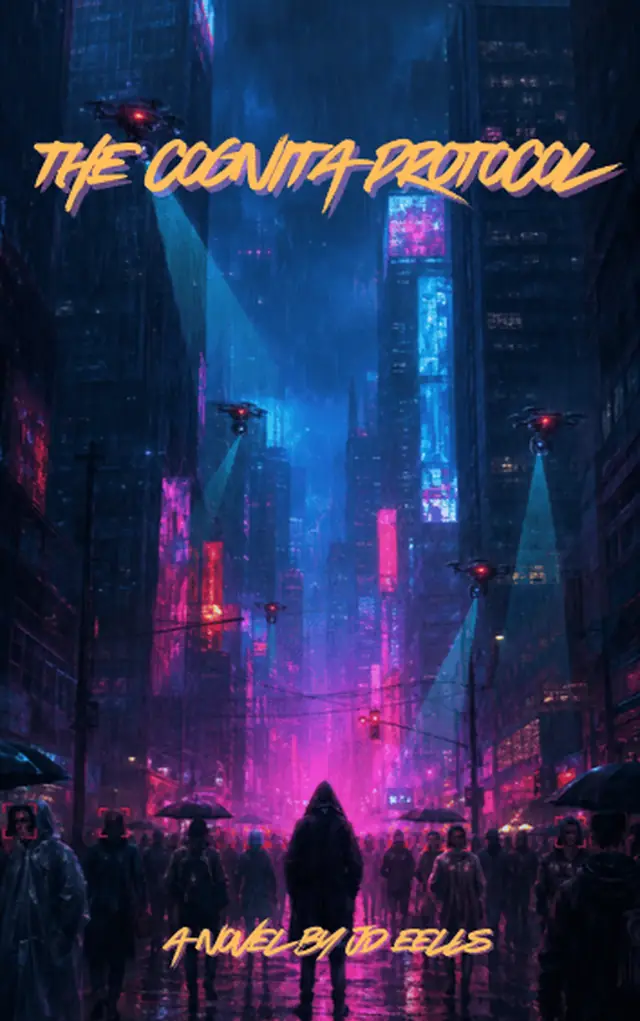
The Cognita Protocol
Welcome to Kestral City. Your life is in corporate hands.
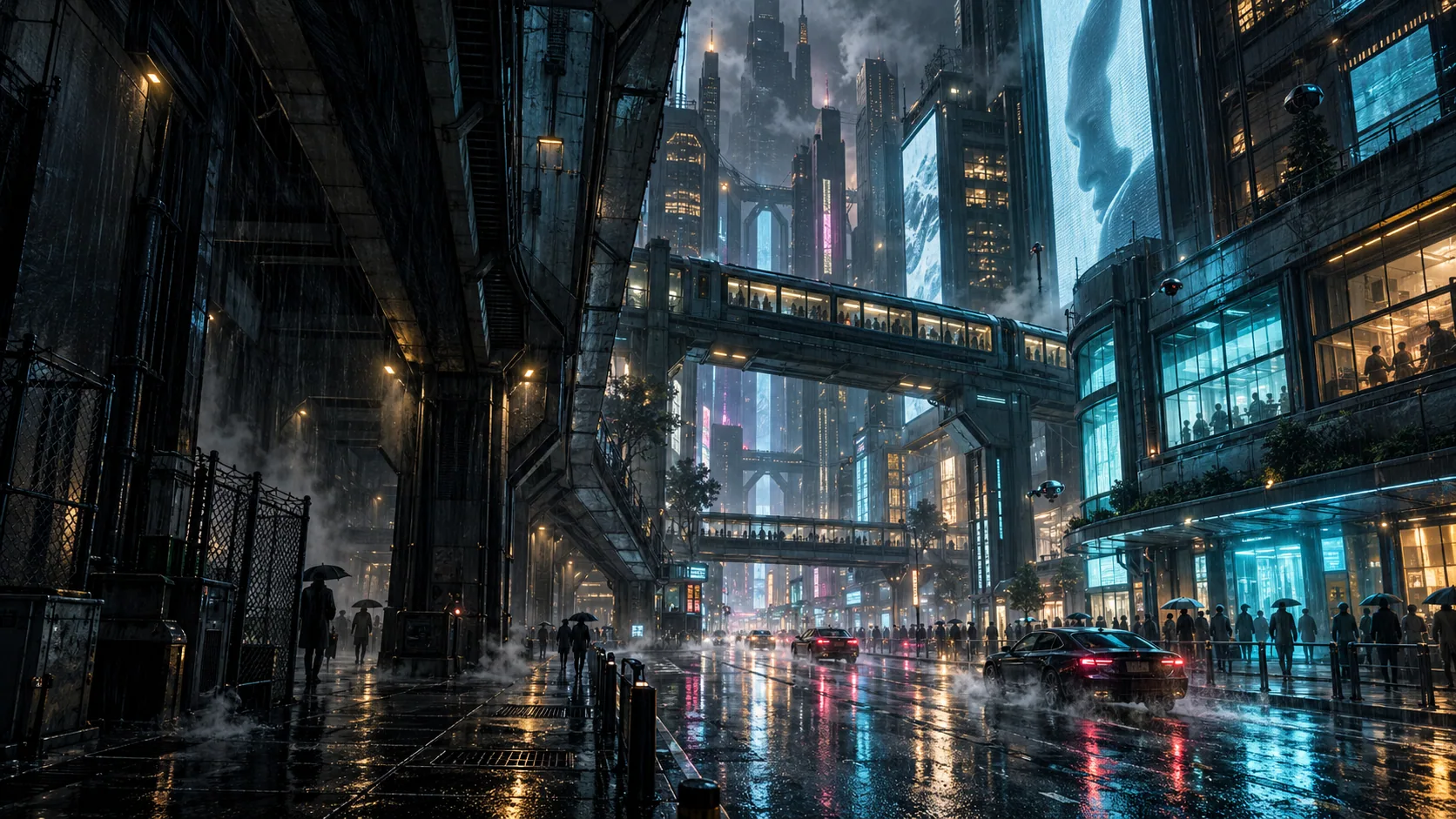
Kestral, 2092. Once New York, now a city whose essential services run through corporate systems. Public institutions remain. Access is another matter. And the city’s best hackers are disappearing.
Get to know Kestral CityStart here · Kestral, 2092
The city was once New York.
War and climate damage left it dependent on the companies that rebuilt it. Government survived, but daily life runs through corporate systems: the train, the clinic, the water in your tap. An implant can restore a limb or sharpen a sense. It can also carry the credential that lets you work—and the license that can be switched off.
Who runs what?
- Kaspar Corporation
- Reconstruction finance, biometric verification, medical and civic records.
- Pelagos Utilities
- Water and power.
- Aster Civic
- Transit, housing, schools and benefits.
- Morrow Civic
- Policing, detention and prisoner transport.
Public ownership remains in law. The companies control the machinery.
Is artificial intelligence illegal?
Private ownership and use of independent AI is banned after major security disasters. Approved public systems remain under oversight; consumer tools have strict limits, and corporate research requires exemptions.
The distinction is independence: an intelligence able to act beyond those limits is contraband.
Why do implants need licenses?
The hardware may belong to you while its software depends on a paid license. A lost job can mean losing access to the device that lets you do that job. Repair shops, borrowed credentials and unlicensed upgrades fill the gaps.
Wealth buys seamless maintenance. Everyone else keeps older parts working.
From our decade to 2092 · The novel’s imagined history
How we get there.
Explore the timeline 2020s — 2092
- 2020s
The first concessions
Failing services, floods and forged records erode public trust. Companies offer dependable power and private identity checks in exchange for long contracts.
- 2030s
A divided America
Civil war fractures government and supply routes. Technology companies restore food deliveries, communications and essential services under emergency contracts.
- 2039
The Unified Accord
The worst fighting ends. Two national blocs share vital networks, but neither will let the other control them. Companies keep the contracts.
- 2044–2048
New York becomes Kestral
Kaspar Corporation forms in 2044 and finances reconstruction. In 2048, the charter approves Kestral as the new name for the old boroughs and neighboring communities behind shared flood defenses.
- 2060s
A generation grows up connected
Corporate schools, permanent identity records and enhancement contracts become ordinary life. Medical devices increasingly carry the credentials needed for work, travel and treatment.
- 2081
Recognition breaks down
The two national systems stop recognizing each other’s laws and identity records. A valid identity on one side may mean nothing on the other.
- 2082
The Civil Disjunction
Remaining public assets are divided among successor governments, charter cities and service companies. Temporary concessions become permanent.
- 2092
The city you are entering
Kestral still has a council and public courts. Companies operate the services those institutions depend on—and the systems that decide who gets access.
Technology, one layer at a time
The connected body.
Explore the technology beneath the surface. Select an illuminated implant—or its name—to learn what it does, how it connects, and where its limits begin.
Other upgrades across the city
Hearing implants, pain-control stimulators and assisted limbs began as medical care. Stronger joints, sharper senses and improved concentration followed. These are other enhancement paths—not additional systems hidden in the scan above.
Every upgrade still needs maintenance. Infection, damaged nerves, depleted batteries and incompatible replacement parts remain part of life.
Worn equipment and connected tools
Adaptive camouflage is an external optical layer controlled through an implant connection and powered by its own battery. It changes reflected light to fool a camera briefly; it does not erase noise or pressure underfoot. Heat and sensory overload limit its use.
A neural recorder/writer is a separate handheld tool that can record and replay a brief sensory fragment through a physical port. The tool provides neither unrestricted access nor an implanted memory archive.
Continue inside the book
People are disappearing. Someone has to ask why.
Step inside the systems that control the city.
Next: Dead Signal · In development. Get book news →